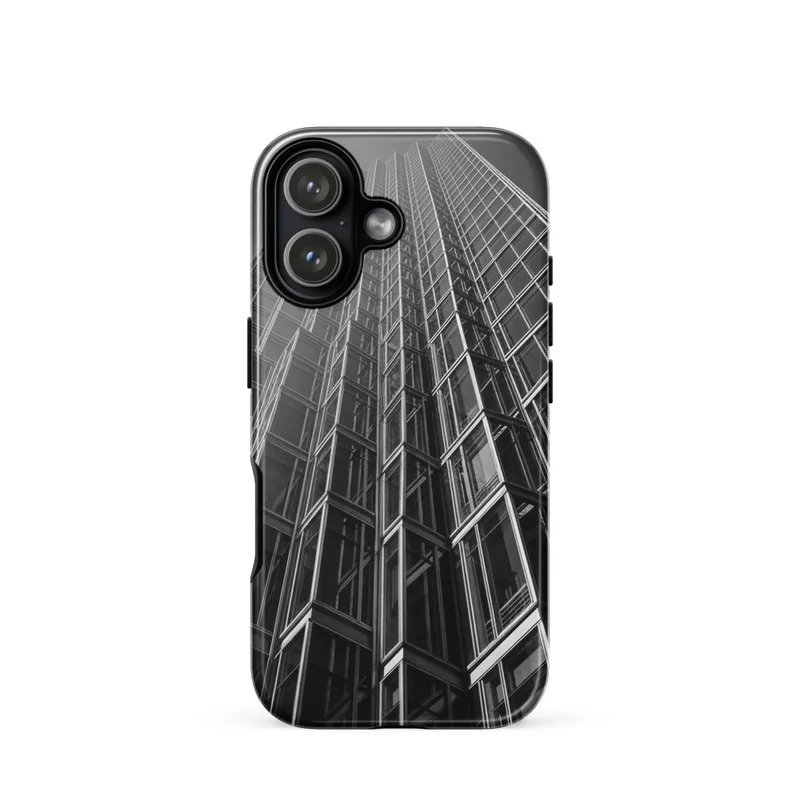
Glass Skyscraper Facade Tough Phone Case, iPhone 15, 16 and 17 case, monochrome geometric design, modern architecture gift
Repeating glass skyscraper facade photography creates bold geometric lines and strong shadows across this tough phone case, rendered in high-contrast black and white for a crisp architectural look. The photorealistic design brings modern city structure to everyday carry and makes a considered gift for architecture and monochrome photography lovers.
Black and white arrives as a field of measured contrasts: pale glass panels, deep window bands, and sharply cut shadows arranged in a repeating grid. The eye meets verticals first, then the horizontal divisions that break the facade into rectangles, creating a steady rhythm across the surface. Some lines run cleanly from edge to edge, while others disappear into reflected darkness, giving the image the slight visual tension of a city seen through glass. There is no decorative colour to soften the structure; the palette stays with white, charcoal, and near-black, allowing the geometry and tonal shifts to carry the design. The photographic detail keeps the surface grounded in a real building, while the cropped composition turns it into an abstract pattern. On an iPhone 15, 16, or 17, that pattern wraps a familiar object in the language of contemporary architecture, with the monochrome finish working equally well against a black, white, or clear everyday setup.
The style belongs to the visual language of modern architectural photography, particularly the period when glass curtain-wall construction made the face of a building read as a disciplined grid of panels and supports. Its concrete marker is the curtain wall itself: a repeated arrangement of glass rectangles held in place by narrow vertical and horizontal divisions, rather than a facade built from solid stone or ornamented masonry. Here, the camera treats that construction as both subject and composition. Repetition gives the case a calm, ordered character, while changing levels of shade suggest reflected streets, neighbouring buildings, and the depth behind the glazing without introducing a separate colour story. It will suit someone drawn to Bauhaus-informed simplicity, contemporary city forms, and photographs that find pattern in functional materials. It also makes a considered gift for an architect, urban photographer, design student, or anyone who prefers a restrained black-and-white object with a clear connection to the built environment.
On a wall, the artwork wants a setting with room around it and a straightforward source of light. A white or cool pale-grey wall will hold the darker lines in relief; a charcoal, concrete, or slate-toned wall will make the white panels recede into a more tonal arrangement. Place it near a desk, bookshelf, entryway, or display shelf where the case can be seen resting beside notebooks, cameras, metal objects, or other pieces with clean silhouettes. Daylight from a nearby window will bring out the contrast between bright panes and shadowed bands, while warm evening light will soften the whites without changing the graphic structure. Avoid a crowded backdrop if you want the facade pattern to remain legible. In a monochrome room, it can echo black frames and silver hardware; among natural wood and muted textiles, it introduces a more urban, geometric note. The tough case is made for daily use, but its facade image also holds together as a small architectural composition when your phone is set down.
“A crisp monochrome architectural pattern turns everyday carry into a refined statement for design-minded city lovers.”
- SubjectRepeating glass skyscraper facade rendered as dramatic black-and-white architectural photography.
- Palette & lightHigh-contrast monochrome emphasizes strong shadows and crisp structural detail.
- CompositionReceding geometric lines create a rhythmic facade pattern with confident visual order.
- Where it fitsA thoughtful gift for architecture enthusiasts, monochrome photography lovers, or design-focused professionals.
| Suited to | office |
| Care | Wipe clean with a dry cloth; avoid abrasive cleaners on the printed face. |
| Shipping | Made to order — ships in 2–5 business days |