Holographic Compact Disc Fridge Magnet, y2k cd icon, desk decor, gift for y2k fans
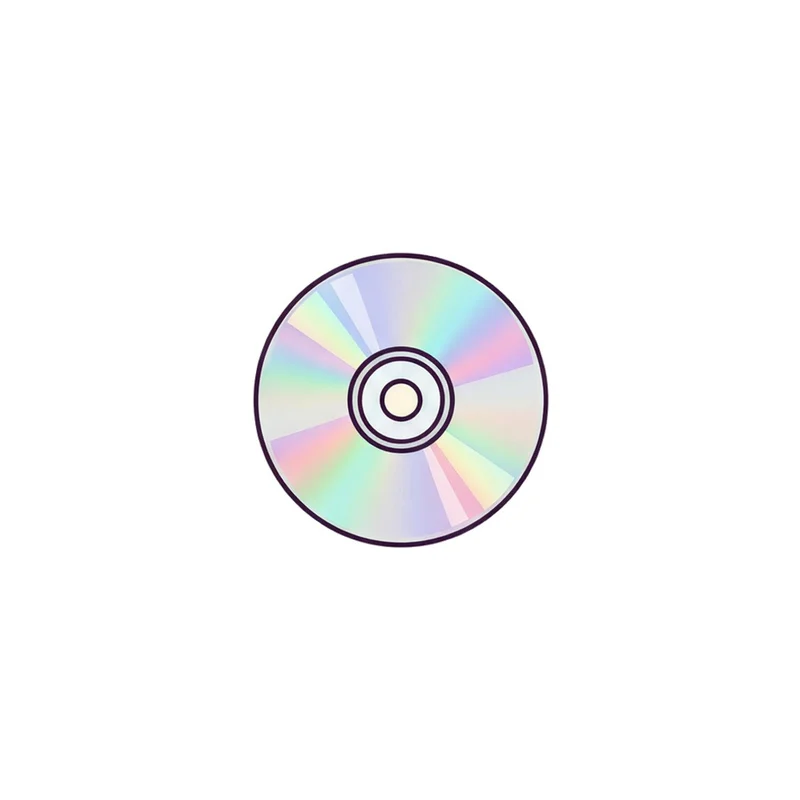
A bare compact disc with a rainbow sheen and a pale centre ring, outlined in deep plum. The plain one — no sparkles, no case.
The compact disc comes from the meeting of recorded music and consumer electronics in the late twentieth century. Philips and Sony developed the format in the 1970s, and CDs reached shops in the early 1980s as a new way to play music with a laser rather than a stylus. Their circular polycarbonate bodies, reflective metal surfaces and small central openings became familiar in homes, record shops, car stereos and school bags. By the late 1990s and early 2000s, the disc was part of everyday Y2K life: albums arrived in jewel cases, computer software came on silver circles, and blank CDs were used for mixes, photo archives and files moved between machines. The object carried both practical and visual meaning. It was a piece of technology, but also a clean geometric sign of the digital future imagined at the turn of the millennium.
This artwork reduces that object to its most recognisable form: a single bare disc, without a jewel case, printed label or decorative additions. Its surface is treated as a field of rainbow colour, shifting through blue, green, violet and warm pink like light caught on a compact disc. A pale centre ring interrupts the reflective surface and gives the circle a clear focal point, while a deep plum outline defines the edge against the wall or whatever surface it sits near. The simple arrangement keeps the familiar proportions of the disc visible, with the central opening and broad outer field doing most of the work. It feels graphic rather than photographic, closer to a Y2K interface symbol or desktop icon than a detailed picture of a music collection. The result is a small image of a specific material object translated into flat, bright colour.
People who remember carrying CDs between bedrooms, listening to albums in portable players or making mix discs on a home computer will recognise the shape immediately. It also suits younger Y2K fans who know the disc through second-hand stereos, old software, family collections and the visual language of early-internet design. On a refrigerator, it can sit among notes, photographs and shopping lists as a colourful reminder of a period when physical media still belonged to daily routines. Near a monitor or on a desk, it connects with the circular buttons, loading screens and reflective surfaces associated with early digital culture. The magnet works for someone who wants a quiet reference to music, obsolete technology or turn-of-the-millennium style without adding a character, slogan or busy scene. Its plain disc shape leaves room for the viewer’s own memories: a favourite album, a handwritten track list, a scratched data disc or the glow of a computer in a late-night room.
“A pared-back holographic CD motif brings playful Y2K color to desks, lockers, and compact modern spaces.”
- SubjectSingle die-cut cartoon compact disc motif with a pale centre ring.
- Palette & lightRainbow holographic sheen contrasts with a deep plum outline and transparent background.
- CompositionOne clean, self-contained CD icon with no sparkles or case.
- Where it fitsA cheerful accent for dorm desks, home offices, lockers, or gifts for Y2K fans.
| Suited to | dorm room, office |
| Material | Made from 0.5 mm flexible vinyl |
| Digital printing | |
| Care | Wipe clean with a dry cloth; keep the printed face free of scratches. |
| Shipping | Made to order — ships in 2–5 business days |