Baby Rhino With A Sprout Fridge Magnet, kawaii safari animal, kids room decor, gift for rhino lovers
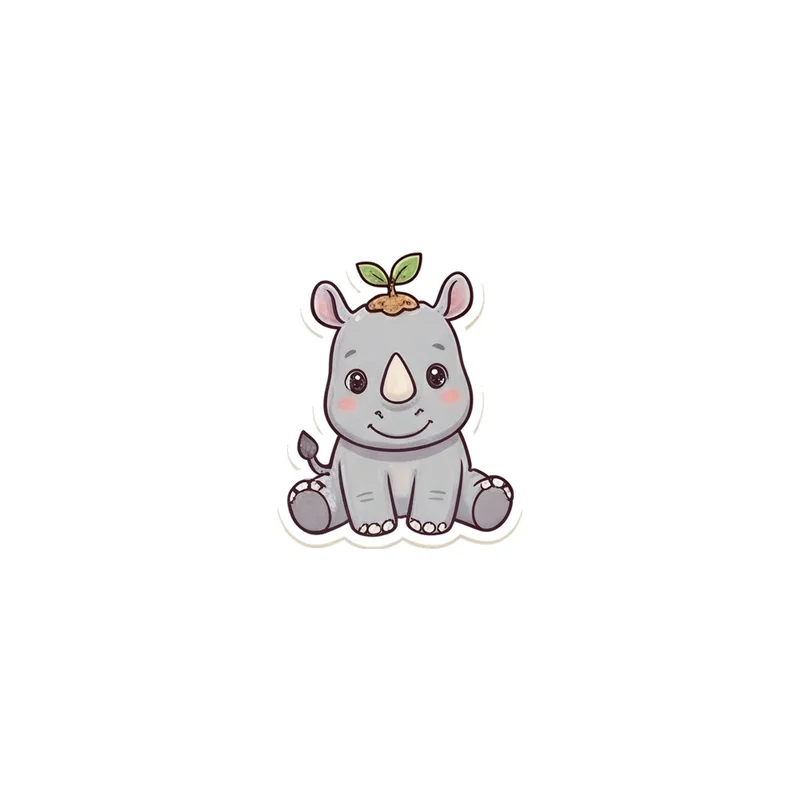
A grey baby rhino sitting with a two-leaf sprout growing out of its horn patch. Odd and sweet on a fridge or a locker.
The eye meets a compact, rounded scene built from a soft grey body, a small green sprout, and dark, clean outlines. The young rhino sits low in the composition, its broad shape giving the image a calm centre, while the stem rises from the area above its nose and separates into two simple leaves. Grey fills most of the picture, with green reserved for the new growth and black or charcoal linework defining the edges. The forms are smooth rather than angular, with little visual clutter around them, so the contrast between the quiet animal and the unexpected plant becomes the main point. It has the gentle strangeness of a small character illustration: a sturdy safari animal paired with a fragile bit of greenery. The limited palette works well against white, cream, pale blue, dusty pink, or light wood, and the clear contours remain easy to read from across a room. On a fridge, the image brings a small patch of grey and green to an otherwise practical surface; on a locker, it gives the door a friendly focal point without turning the whole space into a themed display.
This style belongs to contemporary kawaii illustration, a Japanese visual tradition of character design that became widely recognisable in the late 20th century and continues in children’s goods, stationery, toys, and everyday objects. One concrete marker is the use of reduced, rounded forms in place of realistic anatomy: the animal is identified through its compact body, horn area, and familiar profile, while the design keeps the details spare and approachable. Another is the pairing of an ordinary or recognisable subject with a small, unexpected feature—in this case, fresh leaves emerging where a horn would usually draw attention. Kawaii design often softens the visual language of animals that might otherwise seem large or formidable, using calm proportions and a restrained expression rather than drama or threat. Here, the rhino remains recognisable as a safari animal, but the sprout shifts the mood toward growth, patience, and quiet humour. The result suits a child’s room, a reading corner, a shared play space, or a desk area where small, clearly drawn characters can sit alongside books, wooden toys, coloured pencils, and other everyday objects.
On a wall, place it where the grey body can sit against a light background and the green leaves can catch a little natural brightness. It fits beside a low bookshelf, above a small desk, near a peg rail, or in a nursery corner with other animal artwork. Soft morning light from a nearby window will keep the palette gentle, while a warm evening lamp will make the grey read as cosy rather than stark and bring out the green accent. Avoid crowding it with highly patterned pieces; a plain painted wall, pale timber, or a simple grid of small prints will give the rounded silhouette room to register. Its scale and subject also make sense in transitional spaces: a playroom door, a study nook, a kitchen notice area, or a child’s locker where the sprouting rhino can be seen in passing. The combination of a grounded grey animal and two bright leaves adds colour without demanding a full room makeover.
“A playful rhino magnet pairing gentle humor with a small sprout for cheerful fridge or locker character.”
- SubjectA single grey baby rhino sits with a two-leaf sprout growing from its horn patch.
- Palette & lightGrey cartoon styling keeps the motif soft, approachable, and easy to pair with colorful surroundings.
- CompositionOne die-cut character stands alone against a transparent background, with no grid or surrounding scene.
- Where it fitsA cheerful fridge or locker accent for children's spaces and rhino-loving gift recipients.
| Suited to | kids' room |
| Material | Made from 0.5 mm flexible vinyl |
| Digital printing | |
| Care | Wipe clean with a dry cloth; keep the printed face free of scratches. |
| Shipping | Made to order — ships in 2–5 business days |