Dragonfly Wing Veins Art Print, macro nature photography, nature wall art, dragonfly lover gift, nature-inspired home decor
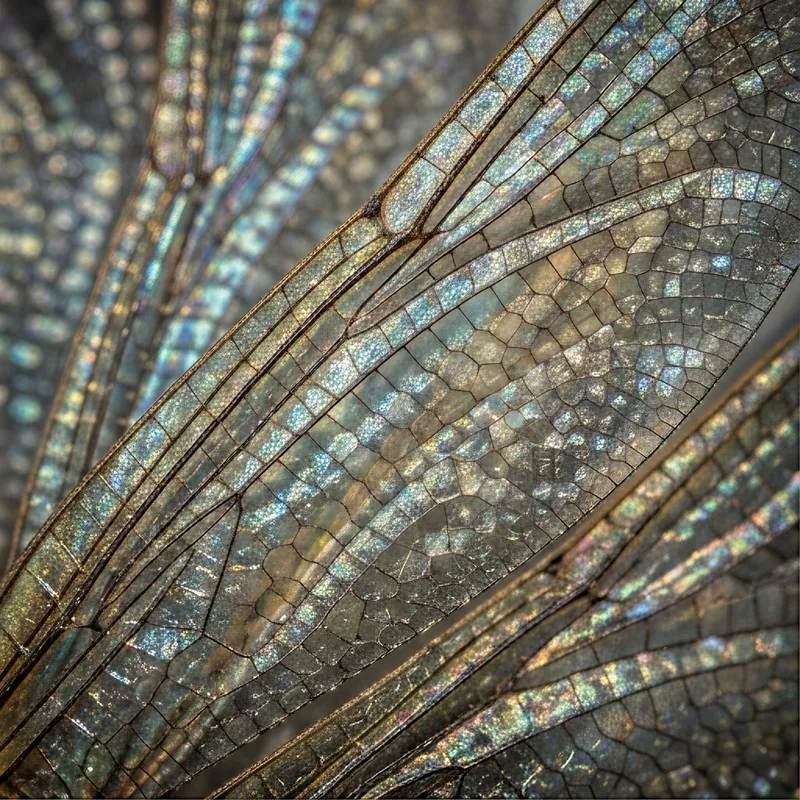
A close-up of a dragonfly wing reveals translucent veins, overlapping microscopic structures, and shimmering structural color in an abstract natural pattern. Digitally printed on Enhanced Matte Paper (189 g/m²), the Art Print preserves the photograph’s fine texture, depth, and soft directional light for a refined nature-inspired accent or thoughtful gift.
This artwork begins with a dragonfly wing, a lightweight natural structure built from branching supports and fine membrane. Seen from a distance, a dragonfly wing can appear almost invisible, but close observation reveals a mapped network of lines, cells, and layered surfaces. Its source is the wetland edge, pond, riverbank, or meadow where dragonflies move through open air; its visual language comes from biology rather than ornament. The wing’s framework is practical, shaped to support flight, yet it also carries the qualities people often seek in abstract art: repeated geometry, irregular spacing, slender arcs, and small translucent fields that catch light. There is a quiet contrast between engineering and delicacy here. Strong linear divisions hold together a surface that looks fragile, while the changing reflection across it brings hints of cool silver, blue, green, or pale amber depending on how the light is imagined. The result is a subject rooted in a real insect but open to associations with maps, stained glass, river patterns, and finely drawn architectural plans.
The photograph treats that wing as a landscape of detail rather than as a simple specimen portrait. The close view removes the dragonfly’s body and surroundings, placing attention on the lines that branch, intersect, and gather into small geometric compartments. Some sections appear to sit behind others, creating a sense of depth across the flat image; other areas dissolve into soft directional light, allowing the surface to shift between clear definition and atmospheric blur. Fine texture remains visible in the printed image, so the eye can move from one junction to the next and notice the balance between rigid structure and flowing contour. The abstract composition suits a wall because it does not depend on a single focal point or a literal scene. It can be read first as a pattern of dark and light marks, then as a fragment of a dragonfly, and finally as a study in natural construction. Digitally printed on Enhanced Matte Paper, it has a quiet, non-glossy presence that keeps the delicate lines and layered tonal changes at the centre.
Dragonfly lovers will recognise the subject in the branching geometry, while macro-photography enthusiasts may appreciate the shift from familiar insect form to almost architectural detail. It would also suit someone drawn to pond life, botanical studies, natural science, or abstract patterns made by living things. In a study, reading corner, hallway, bedroom, or calm workspace, the print can introduce a nature reference without relying on a conventional landscape or a bright, literal animal photograph. Its restrained palette and fine linear structure make it easy to place near wood, white walls, stone, linen, glass, or other natural materials. For a gift, it offers a specific connection for someone who collects dragonfly imagery, spends time outdoors, studies biology, or notices small forms that are usually passed over. Hung alone, it reads as a close observation of a wing; alongside botanical prints, insect studies, or photographs of water and reeds, it becomes part of a broader collection about pattern, light, and the textures found in the natural world.
“A delicate dragonfly wing study that brings quiet, organic elegance to a wall through translucent textures and luminous light.”
- SubjectClose-up study of a translucent dragonfly wing revealing intricate vein patterns
- Palette & lightSoft, luminous tones with delicate translucence and natural light play
- CompositionMacro detail centered with airy negative space around the wing
- Where it fitsA nature lover's living room, reading nook, or gallery wall arrangement
| Style | Photographic |
| Subject | Dragonfly wing veins |
| Colors | gray, charcoal, brown |
| Orientation | Square |
| Suited to | living room |
| Material | Enhanced Matte Paper (189 g/m²) |
| Digital printing | |
| Care | Frame or mount out of direct sunlight; wipe gently with a dry, soft cloth. |
| Shipping | Made to order — ships in 2–5 business days |