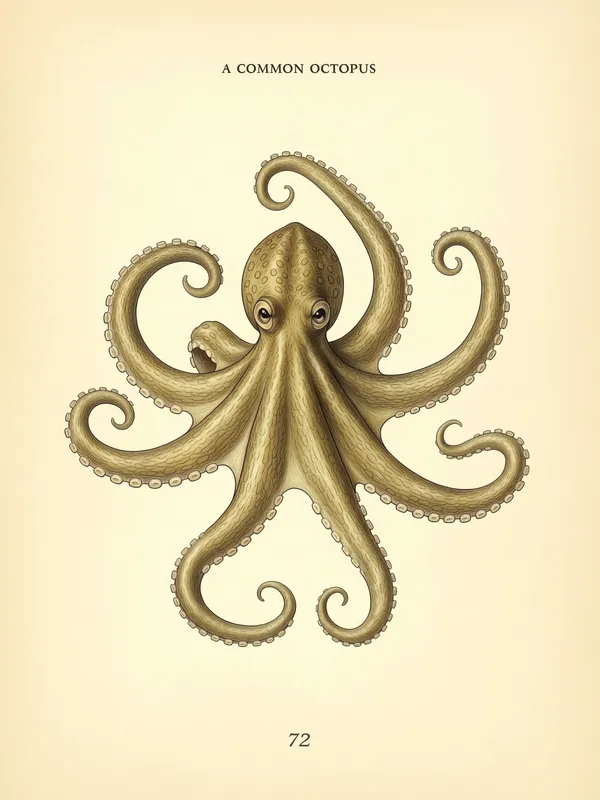
Common Octopus Art Print, vintage natural history illustration, coastal grandmother decor, study wall art, ocean lover gift
A common octopus is rendered in a vintage natural history style, with delicate ink and watercolor detail on a soft cream background. Printed as an art print on Enhanced Matte Paper (189 g/m²), the full-bleed flat composition brings coastal character to a study, bedroom, or reading nook and makes a thoughtful gift for an ocean lover.
A soft cream ground meets the eye first, giving the image the quiet warmth of an old book page. At its centre, a common octopus spreads its rounded body and eight curling arms across the composition, with each limb arranged to create a balanced, almost floral shape. Fine ink contours describe the suckers, folds, and changing surfaces of the skin, while restrained watercolour brings in muted rust, dusky rose, brown, and blue-grey tones. The colours remain gentle rather than bright, allowing the pale background to show around the animal and keep the overall image light. Small variations in the wash add a sense of movement to the tentacles without turning the scene into a busy underwater view. There is no surrounding reef, frame, or seascape competing for attention; the subject sits clearly on its own, making the print easy to read from across a room. The combination of a simple field, careful outlines, and softly layered pigment suits a coastal grandmother interior, a calm study, or any room where natural forms and collected reference images have a place.
The artwork belongs to the natural-history illustration tradition associated with the nineteenth century, when animals were recorded through precise observation and presented as individual subjects for study. One concrete marker of that tradition is the plate-like arrangement: a single specimen is isolated against a plain ground, with descriptive linework taking priority over a dramatic setting. Here, that approach gives the octopus the presence of a specimen from a cabinet, field guide, or marine-life volume, while the watercolour passages keep it approachable and decorative. The ink does more than outline the silhouette; it follows the curve of each arm and picks out the repeated details of the suckers, creating a rhythm that rewards a closer look. The result sits between reference image and wall decoration. It can speak to someone who enjoys tide pools, aquariums, sketchbooks, and old scientific books, but it also works for someone drawn to soft neutrals, botanical-style studies, and the informal character of collected coastal objects. As part of the Vintage Sea Life Illustrations series, it can stand alone or join other marine subjects in a gathered arrangement.
On the wall, this print wants even, gentle light that lets the cream background and fine lines stay legible. It would sit comfortably above a writing desk, beside a bookcase, over a bedside table, or in a reading nook near a window with filtered daylight. Morning light can bring out the pale blue-grey and warm brown notes, while a shaded wall keeps the quieter rose and rust marks from feeling too strong. Avoiding a harsh spotlight helps preserve the soft, page-like character of the image and makes the delicate linework easier to take in over time. A light wood frame would reinforce its natural-history and seaside associations; white, oak, or warm neutral frames would keep the palette airy, while dark wood could give it a more traditional study feel. Hung alone, it offers a focused marine accent. Grouped with shells, maps, botanical studies, or other sea-life illustrations, it can become part of a relaxed gallery wall with the feel of a well-used coastal home. It is a considered gift for an ocean lover, a home library, or anyone who likes a little natural curiosity on the wall.
“A sepia-toned cephalopod study that brings quiet maritime character to coastal-inspired interiors.”
- SubjectDetailed vintage octopus illustration with coiled tentacles in classic naturalist style
- Palette & lightSoft sepia tones with warm, aged-paper feel throughout
- CompositionCentered creature study with flowing tentacles creating organic movement
- Where it fitsCoastal kitchens, beach houses, or any room needing maritime character
| Style | Vintage |
| Subject | Common octopus |
| Colors | cream, white, tan |
| Orientation | Portrait |
| Suited to | kitchen and dining room |
| Material | Enhanced Matte Paper (189 g/m²) |
| Digital printing | |
| Care | Frame or mount out of direct sunlight; wipe gently with a dry, soft cloth. |
| Shipping | Made to order — ships in 2–5 business days |