Vintage Snowdrop Botanical Illustration Art Print, 19th-century scientific style, study decor, conservatory art, nature lover gift
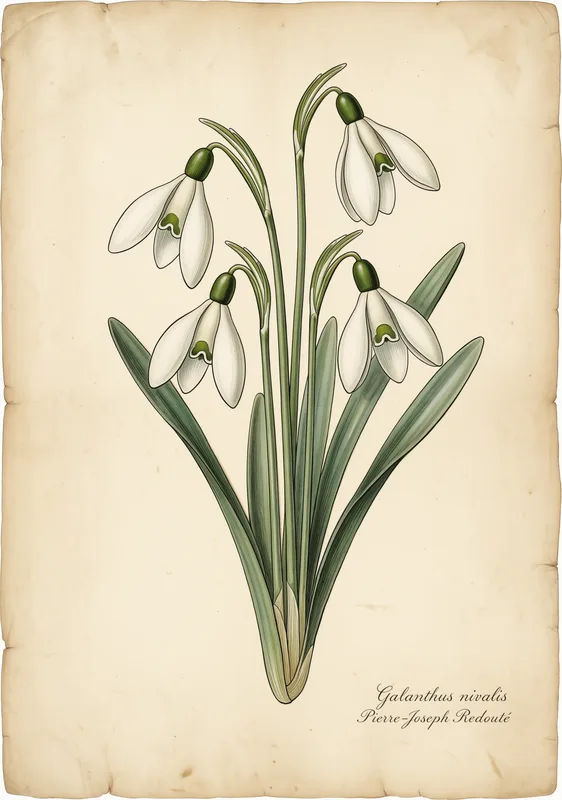
This vintage snowdrop botanical illustration depicts Galanthus nivalis in delicate detail, drawing on the refined look of a 19th-century scientific plate. Printed as an art print on enhanced matte paper, it brings timeless botanical character to a study, conservatory, or reading nook and makes a thoughtful gift for nature enthusiasts and art lovers.
Your eye meets a quiet botanical arrangement: slender green leaves rise from the lower portion of the image, while the snowdrop’s small white flowers bend gently from their stems. The palette is restrained, built around leaf green, soft ivory, and the muted warmth of an aged paper ground. Fine outlines describe the narrow leaves, curved stalks, and rounded flower forms without making them feel hard or mechanical. Each bloom is separated clearly enough to study, yet the composition retains the calm balance of a gathered plant rather than becoming a crowded garden scene. Subtle shading gives the flowers their folded, bell-like structure, with pale grey-green marks adding depth around the petals and foliage. The result has the measured presence of a study image: delicate at a distance, but rewarding closer attention to the small changes in line, contour, and tone.
The style belongs to the tradition of nineteenth-century botanical illustration, when plants were presented with careful observation and a clear purpose: to show their identifying features as accurately as possible. A concrete marker of that tradition is the isolated plant arrangement, with leaves, stems, and flowers displayed against an uncluttered ground so their forms can be examined without competing scenery. This approach gives the image its scientific character while leaving room for the elegance associated with period botanical plates. The snowdrop, identified as Galanthus nivalis, is treated as both a living subject and a study in shape: the drooping flower heads, pointed foliage, and fine stems become the main visual language. Its restrained detail suits rooms where you want artwork that feels thoughtful rather than decorative in a loud or overly polished way. It can sit comfortably among field guides, ceramic vessels, framed maps, and other objects connected with gardens, collecting, or close observation of the natural world.
Hang it where daylight can move gently across the image, such as above a writing desk, beside a bookcase, or on the wall of a conservatory with filtered sun. The enhanced matte surface keeps the presentation subdued, making it well suited to rooms with pale timber, painted plaster, linen, wicker, or natural wood furniture. Against a warm white, mushroom, sage, or soft grey wall, the green foliage will remain distinct while the white flowers echo the surrounding light. In a darker study, the pale blooms can provide a small, quiet focal point above a desk or reading chair; in a bright hallway or bedroom, they can contribute to a lighter botanical grouping. Pair it with other plant studies for a considered gallery wall, or let it stand alone where its vertical stems and open space can be read clearly. Its scale and subject also make it a natural choice for a reading nook, potting room, conservatory shelf wall, or any corner reserved for books and a closer look at the seasons.
“A classic 19th-century snowdrop study brings quiet botanical refinement to a reading corner, where its delicate linework rewards close attention.”
- SubjectVintage botanical study of Galanthus nivalis rendered in 19th-century scientific illustration style.
- Palette & lightSoft ivory ground with graphite-grey linework and the faintest wash of green.
- CompositionSingle bloom centered on the page with labeled root system below, classic specimen plate.
- Where it fitsA reading nook, conservatory shelf, or any quiet corner that invites slow looking.
| Style | Botanical illustration |
| Subject | Snowdrop botanical illustration |
| Colors | cream, beige |
| Orientation | Portrait |
| Suited to | reading nook, gallery wall |
| Material | Enhanced Matte Paper (189 g/m²) |
| Digital printing | |
| Care | Frame or mount out of direct sunlight; wipe gently with a dry, soft cloth. |
| Shipping | Made to order — ships in 2–5 business days |