Tulip Botanical Art Print, French botanical engraving, vintage flower wall art, study decor, gift for botanical art lovers
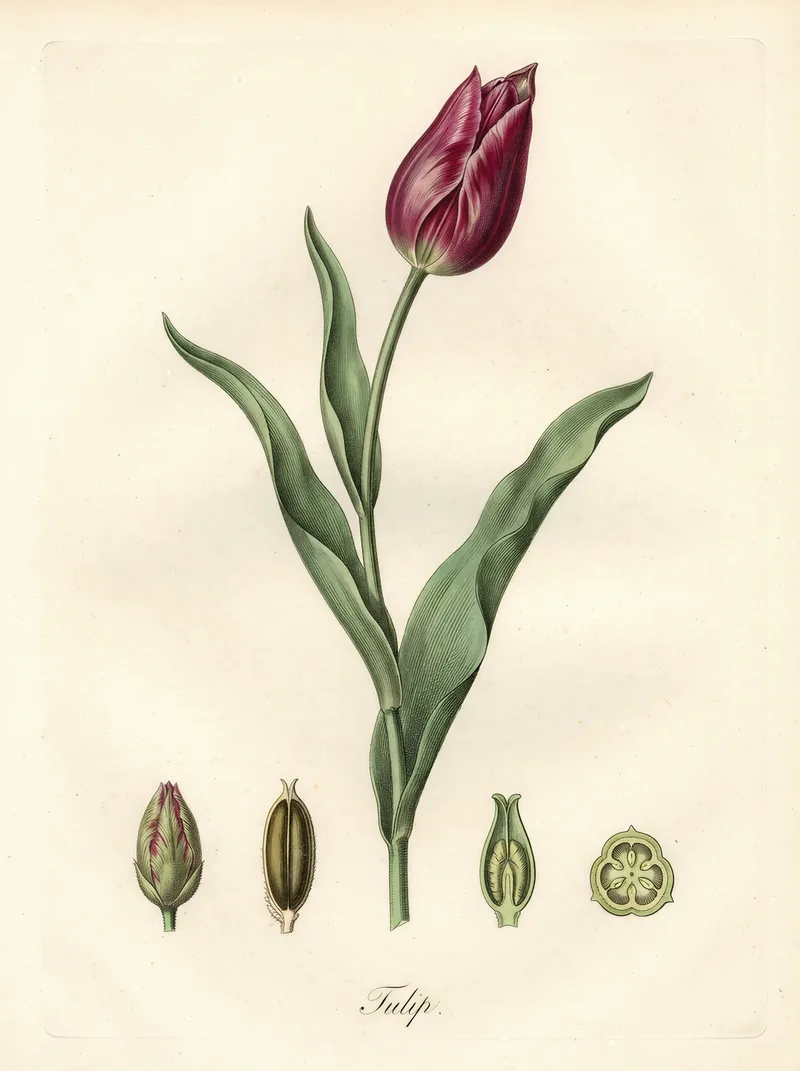
An early 19th-century French botanical atlas plate presents a hand-coloured stipple engraving of a single Tulip, with fine cross-hatching, translucent watercolour washes, and neatly spaced botanical details along the lower edge. This art print on Enhanced Matte Paper (189 g/m²) brings warm ivory archival character to a gallery wall, study, or thoughtful gift for a flower lover.
In a quiet study, this botanical print suits the hour when daylight settles across a desk, a reading chair, or a shelf of well-used books. Hang it where the changing light can pick out the warm ivory ground without flattening the delicate lines: above a writing table, beside a tall window, or on a narrow wall in a bedroom. It sits naturally among oak furniture, folded linen, brass lamps, and small ceramic objects, adding the measured character of a page from a botanical reference book rather than the feeling of a bright, crowded poster. In a hallway, it can give a simple console table a point of focus; in a sitting room, it works with quiet fabrics and aged wood. The restrained palette leaves room for the room around it, while the upright flower brings a clear vertical shape to arrangements built from books, framed sketches, and small landscape studies.
The picture centres on one tulip, shown at full height with its stem rising from the lower portion of the plate and its open bloom held clearly against the pale background. The flower is coloured in layered washes of red, coral, and soft rose, with deeper tones gathered inside the curved petals and lighter areas where the colour thins toward the edges. The stem and leaves are rendered in muted green, with long, pointed leaves that bend gently away from the central line. Fine stippled marks and cross-hatched engraving lines give the petals, foliage, and stem a precise, tactile surface, balancing the softness of the watercolour. Along the lower edge, neatly arranged botanical lettering and small descriptive details anchor the composition like a specimen entry in an early nineteenth-century French atlas. The generous space around the tulip keeps every contour legible and gives the image the calm, orderly quality of a carefully made study.
For a traditional setting, place it in a slim dark-wood or walnut frame, especially against walls painted warm white, mushroom, muted sage, or dusty blue. A natural oak frame will make the ivory ground feel lighter and pair well with pale plaster, linen curtains, and a simple desk. If the room has cooler grey walls, choose a black frame with a narrow profile to echo the engraving lines and keep the tulip’s red and coral tones distinct. Hang it beside another plate from the Classical Botanical Plates series, a small fern study, or a restrained botanical drawing with similar margins. It can also sit above a stack of gardening books, beside a pressed-flower frame, or near a vase of green branches; leave enough space around it so the single bloom remains the visual focus. In a gallery wall, combine it with small architectural sketches, maps, or still-life prints rather than highly saturated modern artwork.
“A museum-style stipple engraving of a tulip balances archival precision with botanical warmth, suited to thoughtful interiors.”
- SubjectA single large tulip stem rises above a tidy row of bud, seed, and cross-section botanical details.
- Palette & lightDelicate translucent watercolour washes over warm ivory laid paper, lit evenly with subtle engraving shadows.
- CompositionEngraved linework with fine cross-hatching anchors the upper two thirds, leaving clean paper beneath the stem.
- Where it fitsA refined touch for kitchens, dining corners, or a first art piece in a new home.
| Material | Enhanced Matte Paper (189 g/m²) |
| Digital printing | |
| Care | Frame or mount out of direct sunlight; wipe gently with a dry, soft cloth. |
| Shipping | Made to order — ships in 2–5 business days |