Tulip Botanical Art Print, French botanical engraving, vintage study decor, museum-style wall art, gift for plant lovers
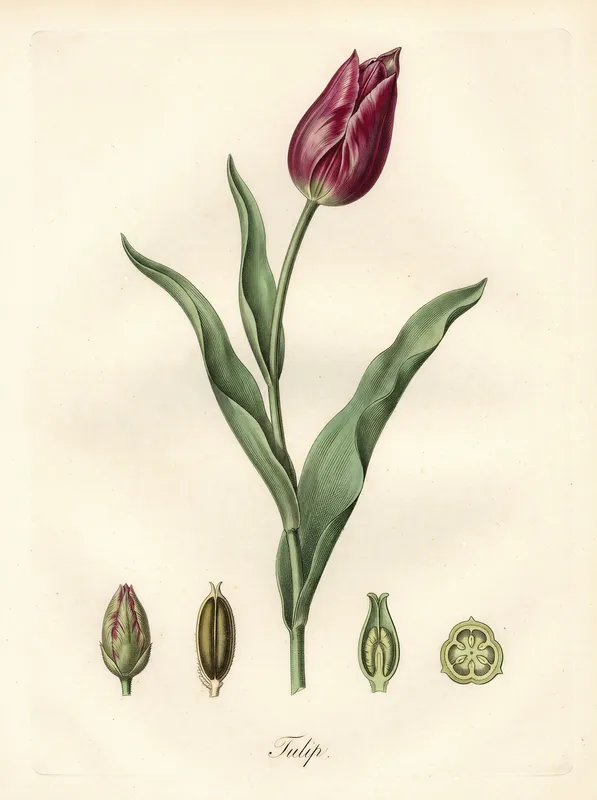
An early 19th-century French botanical atlas plate, this hand-coloured stipple engraving presents a single tall Tulip stem in precise linework and delicate translucent washes, with bud, seed, and cross-section studies aligned below on warm ivory paper. Printed on Enhanced Matte Paper (189 g/m²), this Art Print brings archival botanical detail to a study, bedroom, or thoughtful gift.
For the plant lover who notices the difference between a garden bloom and a botanical study, this tulip print makes a thoughtful birthday present, housewarming gift, or addition to a reading nook. It suits someone who keeps pressed leaves between book pages, grows bulbs on a windowsill, or enjoys the measured detail of old scientific illustrations. It can mark a new home, a spring celebration, or a small personal milestone without feeling tied to a particular season. In a study, bedroom, hallway, or guest room, it brings the character of a French botanical atlas to the wall in a format that feels considered rather than decorative for decoration’s sake. The restrained palette also makes it easy to give to someone whose taste leans toward natural history, antique books, garden rooms, and collected objects.
When they unwrap it, they see one upright tulip stem occupying the centre of a warm ivory ground. The flower rises from a slender green stem, with long leaves extending outward in clean, tapering curves. Fine engraved lines describe the edges, folds, and veins, while hand-coloured washes add muted greens and the layered colour of the tulip bloom. Beneath the main stem, smaller studies are arranged with the orderly spacing of a reference plate: a closed bud, a seed detail, and a cut section that reveals the flower’s structure from another view. Each element has room around it, so the composition feels open and easy to read from across the room, while the stippled marks reward a closer look. The French source and early nineteenth-century format give it the appearance of a page selected from a cabinet of botanical books, translated into wall art without losing the practical purpose of the original study. Against the ivory background, the green stem and leaves remain distinct, and the coloured flower provides the main point of focus.
Over time, the print can settle naturally into a home that changes around it. Pair it with oak, walnut, or painted wood furniture; place it above a writing desk, beside a bookcase, or near a bedside table with a ceramic vase. Its vertical shape works well in a narrow section of wall, while the uncomplicated layout can also hold its own among framed photographs, plant drawings, and small landscape pieces. In a room with linen, woven baskets, terracotta, or soft green textiles, the botanical subject reinforces those natural materials without requiring a matching colour scheme. In a more traditional interior, the engraved linework connects with dark wood, brass, and patterned fabrics. As seasons and furnishings shift, the tulip remains a steady point of reference: a single flower, shown through its bloom, bud, seed, and inner form. It is equally at home beside a real houseplant or on a wall where no watering is needed, offering a lasting reminder of gardens, careful observation, and the structure hidden inside a familiar flower.
“Reproduction of an early 19th-century French botanical atlas plate, where stipple engraving and watercolour washes lend quiet scholarly grace.”
- SubjectA single tulip stem with bud, seed, and cross-section dissections along the lower edge.
- Palette & lightWarm ivory laid paper ground with delicate translucent watercolour washes.
- CompositionTulip stem fills upper two thirds, with dissection details arranged in a single even row.
- Where it fitsA study, library, or reading nook where botanical scholarship is appreciated.
| Material | Enhanced Matte Paper (189 g/m²) |
| Digital printing | |
| Care | Frame or mount out of direct sunlight; wipe gently with a dry, soft cloth. |
| Shipping | Made to order — ships in 2–5 business days |