Seaweed Art Print, antique marine illustration, 19th century scientific art, coastal wall decor, ocean lover gift
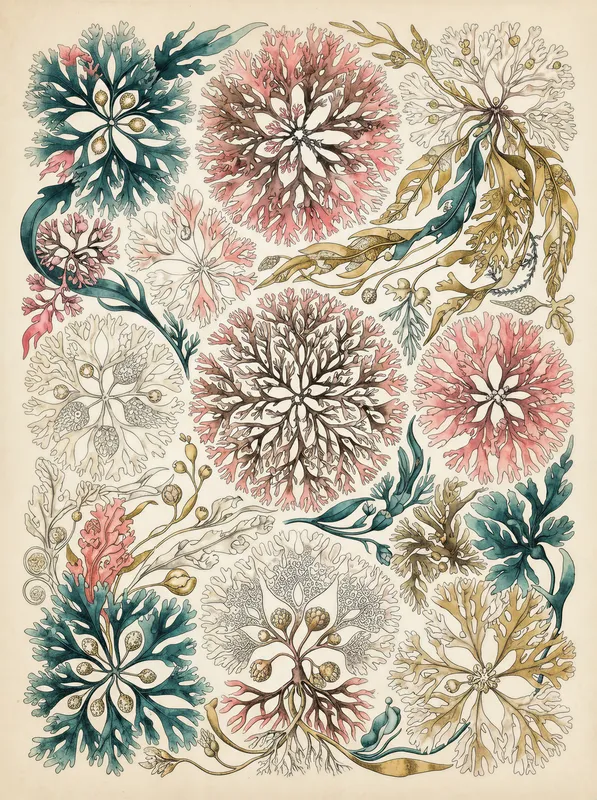
Flowing seaweed specimens fill this art print in an antique marine natural history composition, with fine ink lines and luminous translucent watercolour in deep teal, coral, pearl and gold. Printed on Enhanced Matte Paper (189 g/m²), it brings an aged ivory ground and 19th-century scientific character to a coastal reading nook or makes a thoughtful gift for an ocean lover.
A quiet corner by a window gives this print room to work: a reading nook with a linen chair, a small oak table and a stack of books about the coast. In morning light, the pale ground keeps the arrangement calm while the coloured seaweed catches the brighter parts of the room; later, warm lamplight brings out the coral and muted gold. It also suits a hallway near a coat rack, a bedroom with washed cotton bedding, or a home office where a view of the water is more imagined than visible. Hang it among simple coastal objects—smooth stones, a shell in a shallow dish, a blue glass vase—or let it stand alone above a narrow shelf. Its vertical, botanical layout adds height without making the wall feel crowded, and its old scientific character sits comfortably with well-used furniture, woven textures and natural wood.
The image is arranged as a collection of sea plants rather than a single underwater scene. Long, ribbon-like fronds curve and overlap from the lower edge, while branching forms spread outward in fine, delicate lines. Some stems are narrow and wiry; others widen into soft, translucent blades with irregular edges. Deep teal gives definition to the darker leaves and curling tendrils, while coral appears in warm patches along the branching shapes. Pearl tones soften the spaces between the specimens, and small touches of gold bring a restrained glint to selected details. The colours are set against an aged ivory background, leaving enough open space for each form to remain legible. Fine ink work describes the veins, edges and joins of the plants, with washes of watercolour creating the impression of specimens observed, arranged and recorded. The result has the measured order of a natural-history plate, but the flowing silhouettes keep it connected to the movement of tides and kelp beds. It can appeal to someone drawn to marine biology, vintage illustration, collected objects or the quieter side of coastal decorating.
For a soft, weathered scheme, place it on a warm white, sand, pale mushroom or light grey wall. A muted sea-glass green or blue-grey wall will draw out the deep teal without making the arrangement feel too nautical. An aged brass, thin black, or medium oak frame would suit the ink lines and ivory ground; choose oak for a relaxed cottage or Scandinavian setting, black for a cleaner study, or brass when the room already includes warm metal details. Leave a little breathing space around the print rather than surrounding it with dense decoration. Beside it, try a small map of a shoreline, a second marine specimen, a monochrome shell drawing or a photograph of rocks at low tide. A pair of prints can flank a bookcase or console, while one works above a bedside table, writing desk or reading chair. Keep neighbouring pieces quieter in colour so the coral, teal and gold remain the point of focus.
“A 19th-century scientific seaweed plate with delicate linework and luminous color, offering a quiet, contemplative presence suited to a study.”
- SubjectAntique marine natural history illustration of radially symmetrical seaweed specimens
- Palette & lightDeep teal, coral, pearl, and gold on soft aged ivory with translucent watercolor glow
- CompositionFlowing organic arrangement of large specimens filling the entire picture plane
- Where it fitsA reading nook, study, or thoughtful gift for natural history enthusiasts
| Material | Enhanced Matte Paper (189 g/m²) |
| Digital printing | |
| Care | Frame or mount out of direct sunlight; wipe gently with a dry, soft cloth. |
| Shipping | Made to order — ships in 2–5 business days |