Rose Botanical Art Print, hand-coloured vintage engraving, French botanical decor, study wall art, gift for plant lovers
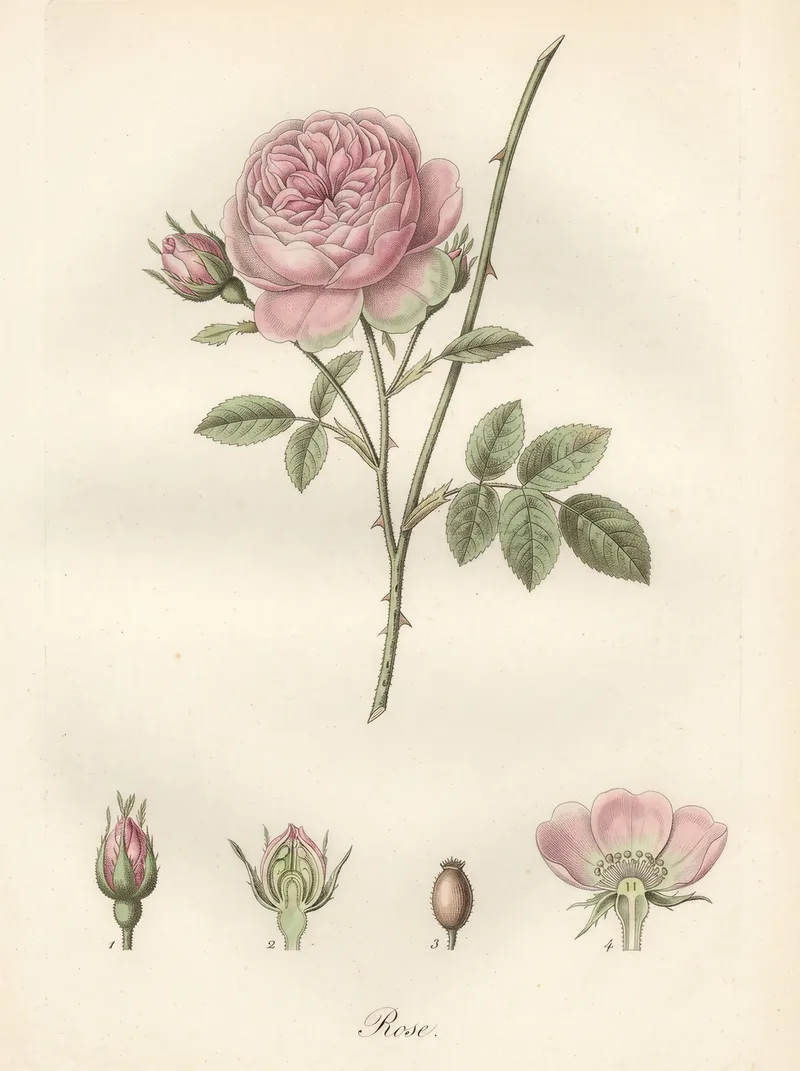
This hand-coloured Rose botanical art print combines precise engraved linework, fine cross-hatching and translucent watercolour washes. A tall central stem rises across the warm ivory paper, while neatly spaced bud, seed and cross-section details sit below with the caption “Rose” at the base. Printed on Enhanced Matte Paper (189 g/m²), it suits a study, bedroom, or thoughtful gift for a botanical art lover.
The rose belongs to the genus Rosa, a group of flowering shrubs cultivated in gardens across the Northern Hemisphere and familiar in both wild landscapes and carefully tended borders. Its recognisable five-petalled flower, thorned stem and changing stages of growth have made it a natural subject for close observation. A rose can be read as a flower, a fruiting plant, or a seasonal record: the open bloom gives way to a swelling hip, while buds, leaves and seeds reveal the plant’s structure beyond its decorative surface. Roses have also occupied a lasting place in European poetry, painting and garden design, where their colour and form have carried associations of love, ceremony and remembrance. Botanical plates approach the plant differently. Instead of isolating one perfect blossom, they set flowers, foliage and reproductive details together so that the viewer can study the whole organism. This print follows that tradition in a restrained, archival-looking composition suited to a French botanical interior.
The composition places a single upright stem through the centre of the sheet, giving the eye a clear path from the lower caption to the upper growth. Alongside it, smaller studies of the rose show different stages and parts of the plant: a compact bud, a seed or fruit detail, and a cut section that exposes what would normally remain hidden. These elements are arranged with measured spacing rather than crowded into a garden scene. Fine charcoal-sepia engraved lines define the contours, while close cross-hatching gives the leaves, stem and flower forms a dry, tactile texture. Translucent watercolour settles over the linework in quiet layers, leaving the warm ivory ground visible between details and preserving the look of a plate made for careful study. The contrast between precise dark marks and pale washes keeps the image botanical rather than theatrical. At the base, the simple word “Rose” acts as a label, reinforcing the connection to nineteenth-century-style reference sheets without adding visual clutter. The vertical format makes the stem feel architectural, almost like a narrow column, while the lower studies create a balanced foundation.
Someone who keeps a vase of cut flowers, grows roses in a courtyard or collects old plant illustrations will recognise the appeal of this print immediately. It speaks to the person who notices leaf shapes, seed heads and the difference between a tightly closed bud and a fully opened flower. In a study, it can sit near a writing desk, bookcase or cabinet of specimens, bringing a measured botanical presence to a room used for reading and concentration. In a bedroom, its warm ivory background and muted engraved character offer a quieter alternative to bright floral decoration. It also suits a hallway, conservatory or garden room, particularly beside natural wood, linen, cream walls, moss green paint or aged brass. For a plant lover, the image offers more than a decorative bloom: it records the rose as a complete living form, from stem and bud to seed and cross-section. As a gift, it works for a gardener, horticulture student, flower arranger or anyone drawn to French botanical decor and the material feel of hand-coloured illustration.
“A refined 19th-century French rose engraving where delicate watercolour washes meet precise stipple linework, offering quiet botanical elegance for any wall.”
- SubjectA single tall rose stem dominates, with a neat row of bud, seed, and cross-section dissections along the lower edge.
- Palette & lightSoft rose pinks and muted sage greens float over warm ivory laid paper, lit by even archival clarity.
- CompositionThe unbroken stem fills the upper two thirds, tapering cleanly above an airy lower band of small botanical studies.
- Where it fitsAn ideal centrepiece for a bedroom, dining room, or grouped arrangement on a botanical gallery wall.
| Material | Enhanced Matte Paper (189 g/m²) |
| Digital printing | |
| Care | Frame or mount out of direct sunlight; wipe gently with a dry, soft cloth. |
| Shipping | Made to order — ships in 2–5 business days |