Poppy Pressed Specimen Art Print, antique botanical art, romantic wall decor, herbarium gift, flower lover present
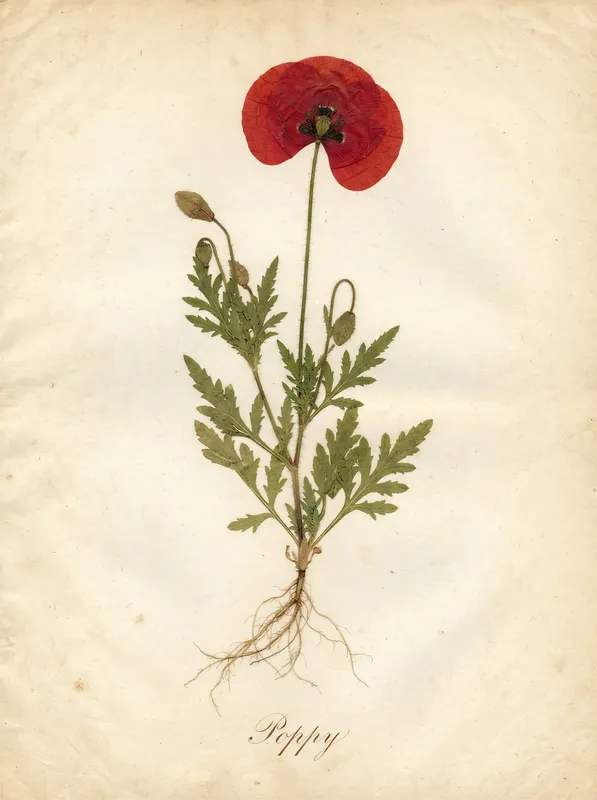
An antique pressed flower study of Poppy presents the complete plant, with its fine fibrous root system still attached at the base, while the stem and leaves lie loose and unattached on a warm ivory sheet. The vivid petals sit beside faded brown handwritten script reading “Poppy”; as an art print on Enhanced Matte Paper (189 g/m²), it suits a quiet reading nook or thoughtful botanical gift.
In a quiet reading nook, this botanical print suits the hour when the room has settled and the last daylight rests across the wall. Hang it near a wooden bookcase, a small writing desk, or a linen-covered armchair where its warm ivory ground can gather the soft tones of the room. Morning light brings out the contrast between the vivid flower and the muted paper; in the evening, a nearby lamp makes the faded brown lettering feel like a found note from an old field journal. It also works in a bedroom, hallway, or home office that has room for a delicate, considered detail rather than a crowded arrangement. Set among novels, a ceramic vase, dried stems, or a small stack of botanical books, it introduces the feeling of a collected herbarium without turning the space into a formal display. The subject is recognisable at a glance, while the loose arrangement and aged-looking surface reward a closer look from a chair or desk.
The image records a poppy as a pressed specimen, showing the plant from its fine, fibrous roots upward. At the base, the root system remains attached and spreads in narrow strands across the warm ivory sheet, giving the composition a grounded, tactile quality. Above it, the stem and leaves have been placed separately, with their parts lying loose rather than forming a single upright plant. The flower sits beside them as the strongest point of colour: its petals are vivid against the restrained background, with the visual softness and irregular edges associated with a preserved bloom. Near the flower, faded brown handwriting spells “Poppy,” adding the practical, personal character of a labelled herbarium page. The open space around the specimen lets each element breathe, from the delicate roots to the larger petal shape, and keeps the study easy to read from across the room. Its appeal comes from that balance of documentation and romance: a real plant broken into carefully observed parts, arranged on paper like a keepsake gathered from a garden or meadow.
For a calm pairing, place it on a chalky white, pale mushroom, soft sage, or muted blush wall, where the ivory background will sit naturally without disappearing. A slim oak frame brings out the print’s warm paper tone and connects it to shelves, floors, or other natural wood nearby. For a more collected look, choose a narrow walnut or dark brown frame to echo the handwritten script and make the vivid petals stand forward. Hang it beside a second specimen from the Pressed Herbarium Specimens series, leaving a small, even gap so the pieces read as pages from one collection. It can also sit beside a simple landscape, a small still life, or a framed botanical line drawing; choose neighbouring artwork with quieter shapes so the poppy remains distinct. In a small arrangement, place it above a side table with a clear glass bud vase, a stack of gardening books, or a shallow wooden tray. Keep the surrounding objects restrained, allowing the roots, loose leaves, flower, and handwritten name to remain the focus.
“A heritage botanical specimen with vivid red petals and intact roots, grounded by warm ivory paper and a single handwritten label.”
- SubjectComplete pressed poppy plant: fine fibrous roots, slender stem, leaves, and saturated red blooms laid loose.
- Palette & lightRich scarlet petals against soft warm cream paper with gentle aged tonality and delicate fibre texture.
- CompositionWhole plant arranged vertically across the sheet, with a single line of faded brown script centered at the base.
- Where it fitsSuits a kitchen nook, a calm living-room wall, or as a thoughtful gift for the botanical collector.
| Material | Enhanced Matte Paper (189 g/m²) |
| Digital printing | |
| Care | Frame or mount out of direct sunlight; wipe gently with a dry, soft cloth. |
| Shipping | Made to order — ships in 2–5 business days |