Passionflower Art Print, French botanical engraving, vintage study decor, plant lover gift, museum-inspired wall decor
An early 19th-century French botanical atlas plate presents a hand-coloured stipple engraving of Passionflower, with precise linework, fine cross-hatching, translucent watercolour washes, and neatly arranged botanical details. Printed on Enhanced Matte Paper (189 g/m²), the warm ivory ground brings an archival, museum-inspired presence to the composition, making it a refined choice for a study, hallway, or thoughtful gift for a plant lover.
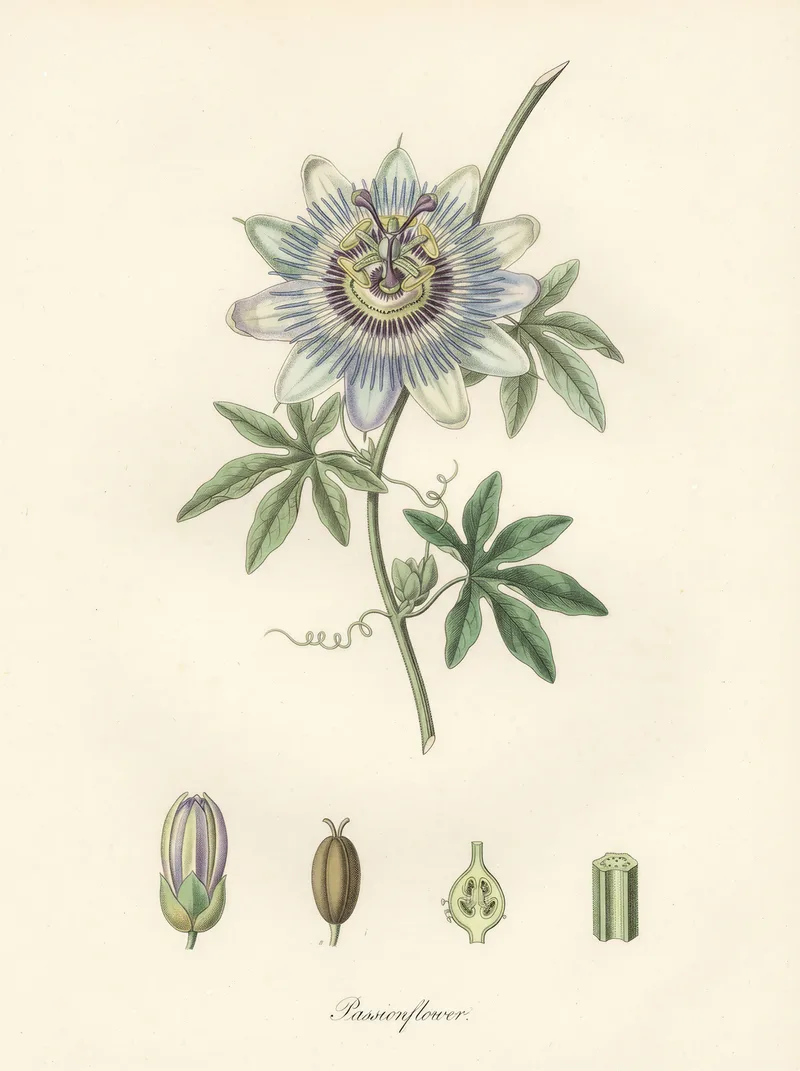
The eye meets a slender passionflower arranged against a warm ivory ground, its leaves, tendrils, and open bloom set out with the measured balance of a botanical study. The palette stays close to the plant: fresh greens in the foliage, muted blue and violet around the flower, and small touches of yellow and cream at its centre. Fine black and brown lines describe the curling stems and veined leaves, while close cross-hatching gives the forms a quiet sense of depth. The flower is built from delicate, overlapping shapes rather than broad blocks of colour, with soft watercolour washes allowing the engraved linework to remain visible beneath them. Small botanical details are kept separate and legible, giving the composition an orderly quality that rewards a closer look. On the warm ivory surface, the coloured areas feel gently aged without losing their clarity, making the print easy to place among natural wood, painted furniture, or neutral textiles.
This style belongs to the early 19th-century French tradition of illustrated botanical atlases, when plants were recorded through a combination of careful observation, engraved drawing, and hand-applied colour. One concrete marker of that tradition is the stipple engraving: the image is formed through fine clusters of dots and precise marks, rather than the smooth, continuous tones of a modern photograph or digital illustration. Cross-hatched shadows define the folds and overlaps of the passionflower, while restrained washes distinguish the petals, leaves, and stem. The result sits between scientific record and decorative image. It identifies the plant through its structure—the shape of the bloom, the arrangement of the foliage, and the direction of the tendrils—while maintaining the compositional calm associated with a plate in a collected volume. In the Classical Botanical Plates series, that period character makes the artwork suited to interiors where books, specimens, ceramics, or framed maps already have a place.
Hang it where the wall receives soft daylight or warm lamplight, allowing the pale ground and small shifts in green, violet, blue, and yellow to remain easy to read. In a study, it can sit above a writing desk or beside a bookcase, where its measured layout complements shelves, wood grain, and other collected objects. In a hallway, the vertical botanical arrangement gives a narrow section of wall a clear focal point without demanding a crowded display. It also works in a bedroom, reading corner, conservatory, or plant-filled sitting room, especially alongside natural linen, oak, walnut, brass, or muted green paint. The matte finish keeps the image visually quiet under indoor lighting, while the warm ivory tone helps it sit comfortably against white, cream, stone, sage, or charcoal walls. For a plant lover, it offers a way to bring the structure of a passionflower indoors even when the surrounding room has little room for pots or climbing stems.
“A scholarly 19th-century French botanical engraving whose precise stipple linework and translucent watercolour washes lend quiet sophistication to any room.”
- SubjectSingle passionflower stem above a neat row of bud, seed, and cross-section dissections, captioned "Passionflower"
- Palette & lightWarm ivory laid paper with delicate translucent watercolour washes and fine engraved linework
- CompositionOne central stem filling the upper two-thirds above a tidy row of dissections along the lower edge
- Where it fitsStudy, reading nook, kitchen corner, or any space craving quiet botanical refinement
| Material | Enhanced Matte Paper (189 g/m²) |
| Digital printing | |
| Care | Frame or mount out of direct sunlight; wipe gently with a dry, soft cloth. |
| Shipping | Made to order — ships in 2–5 business days |