Moss & Lichen Botanical Art Print, Victorian natural history illustration, woodland study decor, gift for nature lovers
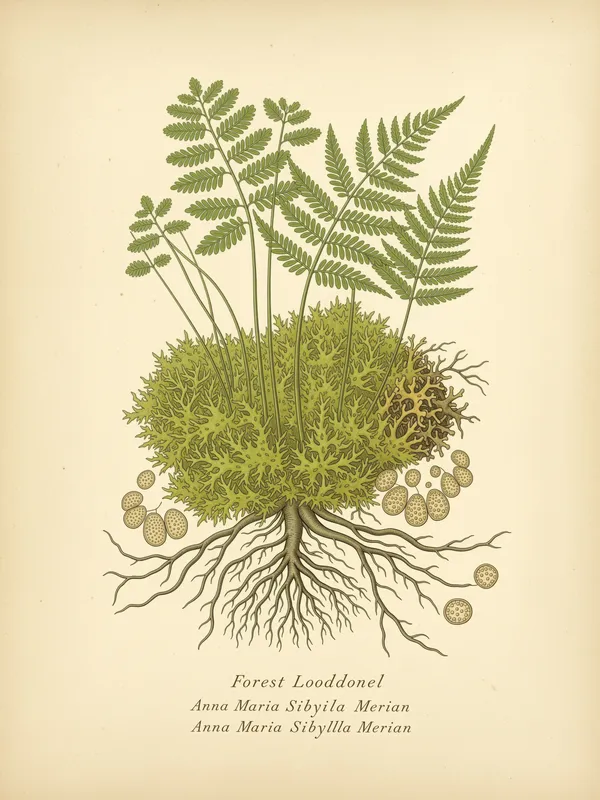
Moss and lichen emerge in a Victorian natural history study, rendered with fine pen-and-ink lines, delicate watercolor washes, Latin species labels, and an aged cream parchment ground. Printed on Enhanced Matte Paper (189 g/m²), the Art Print brings precise botanical detail to a reading nook, study, or woodland-inspired interior, and makes a thoughtful gift for nature and vintage illustration enthusiasts.
A reading nook, home study, or quiet corner of a bedroom gives this woodland study room to settle into its surroundings. Hang it above a small oak bookcase, beside a green velvet chair, or near a desk where afternoon light falls across the wall. In soft daylight, the cream ground keeps the composition warm, while the fine dark lines remain clear against shelves of field guides, antique-looking books, and stoneware pots. In the evening, a shaded table lamp brings out the muted greens and browns without making the image feel too bright or formal. It suits a room with natural wood, wool textiles, dried branches, and other small reminders of the forest, whether the setting is a country cottage, an apartment reading corner, or a calm workspace.
The image presents moss and lichen as the subjects of a Victorian natural history plate rather than as a broad landscape. Several botanical forms rise from the lower portion of the composition, with compact mossy growths, fine branching structures, and lichen shapes arranged for close inspection. The lines are narrow and carefully controlled, defining edges, stems, textures, and the small variations within each cluster. Watercolor washes add restrained touches of sage, olive, ochre, grey-green, and warm brown, leaving the forms detailed but not heavy. Latin species names sit alongside the specimens in the manner of a collected scientific reference, giving the page the character of a woodland study found in an old naturalist’s cabinet. The lightly weathered cream background supports the antique appearance, while the open spaces around the specimens let each label and contour remain legible. It is an image for looking closely: a quiet arrangement of undergrowth, written notes, and measured observation.
For a traditional combination, use a narrow walnut, dark oak, or black-stained wood frame against a warm white, mushroom, clay, or pale sage wall. A slim antique-brass frame can bring out the parchment tone, while a simple natural-wood frame keeps the print closer to the feeling of a field notebook. On a deep forest-green wall, choose a light wood or cream-painted frame to create separation around the image; on a pale wall, darker wood will give the fine linework more definition. Hang it beside fern, mushroom, tree, or woodland landscape artwork, keeping the neighbouring pieces in related greens, browns, charcoal, and faded cream. It can also sit above a console with a small brass lamp, beside a botanical shelf of glass jars and field guides, or within a grouped arrangement of vintage-inspired nature studies. As part of the Victorian Forest Botanicals series, it pairs naturally with other plant illustrations while remaining focused on the small, often overlooked textures of the forest floor.
“A Victorian botanical study finds beauty in moss and lichen's overlooked textures, lending a contemplative, nature-rooted calm to curated walls.”
- SubjectVictorian-style close study of moss cushions and branching lichen, rendered with scientific tenderness.
- Palette & lightMuted sage, moss green, and umber on warm off-white, with soft even light and no harsh shadows.
- CompositionLayered organic forms fill the frame edge-to-edge, like a pressed specimen pinned to a study page.
- Where it fitsReading nooks, sunlit hallways, or grouped inside a botanical gallery wall for nature enthusiasts.
| Style | Botanical illustration |
| Subject | Moss and lichen |
| Colors | cream, beige |
| Orientation | Portrait |
| Suited to | gallery wall |
| Material | Enhanced Matte Paper (189 g/m²) |
| Digital printing | |
| Care | Frame or mount out of direct sunlight; wipe gently with a dry, soft cloth. |
| Shipping | Made to order — ships in 2–5 business days |