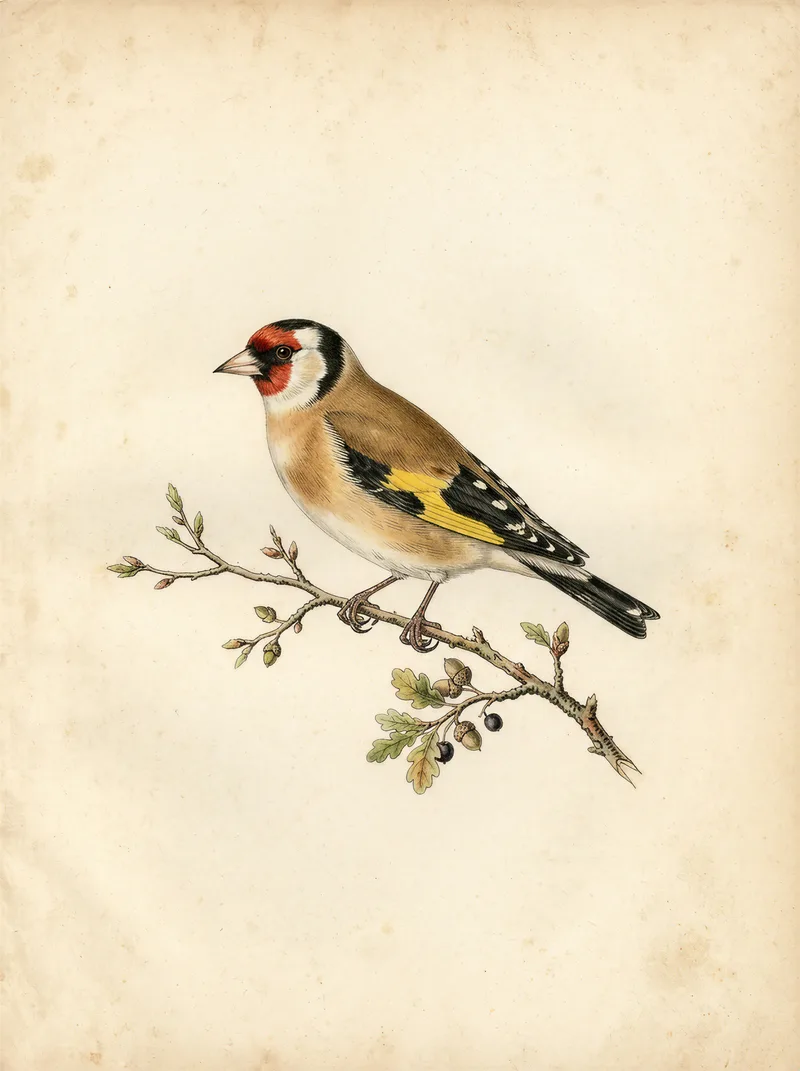
Goldfinch Art Print, antique ornithological illustration, vintage bird wall art, 19th-century natural history, nature lover gift
This art print presents an antique ornithological study of a goldfinch perched on a slender leafy branch, rendered in finely detailed watercolour and ink with soft naturalistic colour on a warm cream ground. Subtle age mottling gives this 19th-century natural history image quiet character, while Enhanced Matte Paper (189 g/m²) preserves its delicate detail for a nature-inspired gallery wall or thoughtful bird lover’s gift.
The European goldfinch is a familiar bird of gardens, hedgerows and open countryside, recognised by its scarlet face, black-and-white head and bright yellow wing bars. Its slender bill is suited to seeds, especially those of thistles and teasels, which helped make the bird a common subject for naturalists observing Britain and mainland Europe. During the 19th century, illustrated natural-history books and loose plates brought carefully recorded birds to readers who might never have studied one at close range. These images were made to identify shape, markings and posture as much as to please the eye, placing a living creature within the wider study of plants, habitats and seasonal change. The goldfinch carries that connection to the field and hedgerow with it: a small, recognisable bird whose patterned plumage stands out against muted foliage.
This print treats the subject as an antique ornithological plate, showing the goldfinch balanced on a narrow branch with a few leaves extending around its body. Watercolour gives the breast, back and wings softly layered colour, while fine ink lines define the feathers, beak, claws and stems. The red mask and yellow wing markings provide focused accents against the restrained greens, browns and greys of the branch and plumage. A warm cream background keeps the composition open, like a page removed from a natural-history volume, and allows the outline of the bird and foliage to remain easy to read. Small signs of age across the surface add a gently uneven, timeworn quality without distracting from the delicate draughtsmanship. The result is a quiet study built from line, wash and negative space rather than a dense scene, making the goldfinch the clear point of attention.
This piece will appeal to birdwatchers, gardeners, illustrators and anyone drawn to the visual language of old field guides and natural-history collections. A person who knows the goldfinch from a garden feeder may recognise the red face and yellow wing flash immediately; someone who enjoys plants may be drawn to the close relationship between the bird and its leafy perch. It also suits a collector of vintage-inspired botanical and zoological art, particularly alongside prints of British birds, seed heads, grasses or other illustrated studies. Hung on its own, the narrow branch and pale ground give it a calm, considered presence. Grouped within a gallery wall, its cream, olive, ochre and crimson tones can connect more colourful artwork with wood, linen or muted painted surfaces. For a nature lover or bird enthusiast, it offers a way to bring a specific species, an old-fashioned scientific sensibility and the character of a 19th-century illustrated plate into the home.
“A 19th-century ornithological study that brings quiet, scholarly charm to any wall, with feather-by-feather detail that rewards a closer look.”
- SubjectSingle goldfinch perched on slender branch with a few leaves, rendered in fine watercolour and ink
- Palette & lightWarm cream paper ground with subtle age mottling, soft naturalistic colouring throughout
- CompositionCentered single subject with delicate branch, classic 19th-century natural history plate arrangement
- Where it fitsReading nook, study, or curated gallery wall of vintage natural history prints
| Material | Enhanced Matte Paper (189 g/m²) |
| Digital printing | |
| Care | Frame or mount out of direct sunlight; wipe gently with a dry, soft cloth. |
| Shipping | Made to order — ships in 2–5 business days |