Cornflower Art Print, antique pressed flower study, romantic botanical wall art, gift for herbarium lovers, vintage-inspired decor
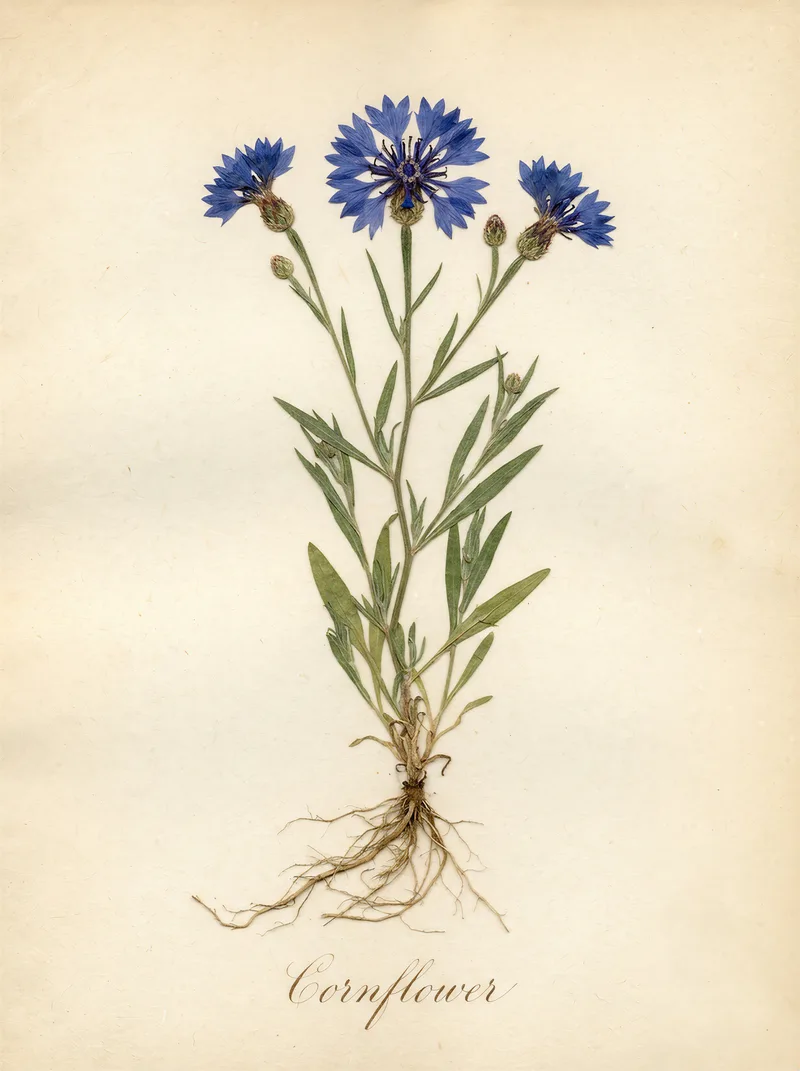
An antique Cornflower pressed plant study shows the complete specimen, including its fine fibrous roots, while the stem and leaves rest loose on warm ivory paper beneath vivid saturated blooms and faded handwritten script. This art print uses Enhanced Matte Paper (189 g/m²) to bring romantic herbarium character to a reading nook or botanical-minded gift.
The cornflower, or Centaurea cyanus, is a familiar plant of European cereal fields, where its blue heads once appeared among ripening wheat and rye. Its common name reflects that agricultural setting: it was a flower of the cornfield rather than a cultivated garden border. The plant has also gathered cultural meaning around its colour and persistence. In France, the bleuet became a remembrance emblem after the First World War, while across botanical traditions it has remained a sign of summer fields, hedgerows, and uncultivated ground. Its structure is modest but distinctive: narrow leaves, a slender stem, and a fringed flower head made from many fine, pointed florets. Seen as a whole specimen, it belongs as much to the language of collecting and observation as to the landscape where it grows.
This study presents the cornflower as a preserved botanical object rather than a loose bouquet. The entire plant is visible, from its delicate, fibrous roots to the stem and leaves laid along the lower portion of the sheet. Above them, saturated blue blooms provide the clearest focus, their sharp, feathery edges set against a warm ivory ground. The arrangement has the quiet irregularity of a specimen mounted by hand: the foliage rests slightly apart from the flowers, and the roots remain exposed instead of being concealed by soil or a decorative vase. Faded handwritten script passes behind the plant, adding the visual language of an old herbarium record without competing with the blue petals. The softened paper tone, restrained ageing, and measured spacing give the image the character of a page taken from a botanical cabinet, while the vivid blossoms keep it from becoming muted or purely archival.
This print will speak to anyone who notices plants in the margins of ordinary places: herbarium collectors, gardeners, readers of botanical books, and people who remember blue flowers growing beside a country path or grain field. It suits a reading nook, a study, an entryway, or any wall where a small piece of natural history can sit alongside books, dried grasses, wood, linen, or other quiet materials. Herbarium lovers may appreciate the complete specimen and visible roots; admirers of vintage-inspired interiors may be drawn to the ivory field, faded writing, and restrained antique character. It also makes a thoughtful gift for someone who keeps pressed flowers, sketches plants, visits botanical gardens, or finds meaning in the careful record of a single species. Hung alone, the cornflower has the presence of a focused study. Placed with other pieces from the Pressed Herbarium Specimens series, it can become part of a wall arranged like a collection of gathered plants, with this blue-flowered field species providing a clear note of colour.
“An antique pressed cornflower specimen with vivid petals and intact roots brings quiet, scholarly romance to a botanical wall arrangement.”
- SubjectComplete pressed cornflower plant with fine fibrous root system, loose stem and leaves, hand-labeled in faded script.
- Palette & lightRich saturated blooms against warm ivory cream paper with gentle age tone and visible paper fibre texture.
- CompositionSingle specimen laid flat on antique sheet with elegant handwritten 'Cornflower' script centered at the bottom.
- Where it fitsIdeal for a botanical gallery wall or as a thoughtful gift for nature-loving friends and herbarium enthusiasts.
| Material | Enhanced Matte Paper (189 g/m²) |
| Digital printing | |
| Care | Frame or mount out of direct sunlight; wipe gently with a dry, soft cloth. |
| Shipping | Made to order — ships in 2–5 business days |