Orbis Terrarum Map Art Print, vintage cartography, study wall art, history lover gift, antique world map decor
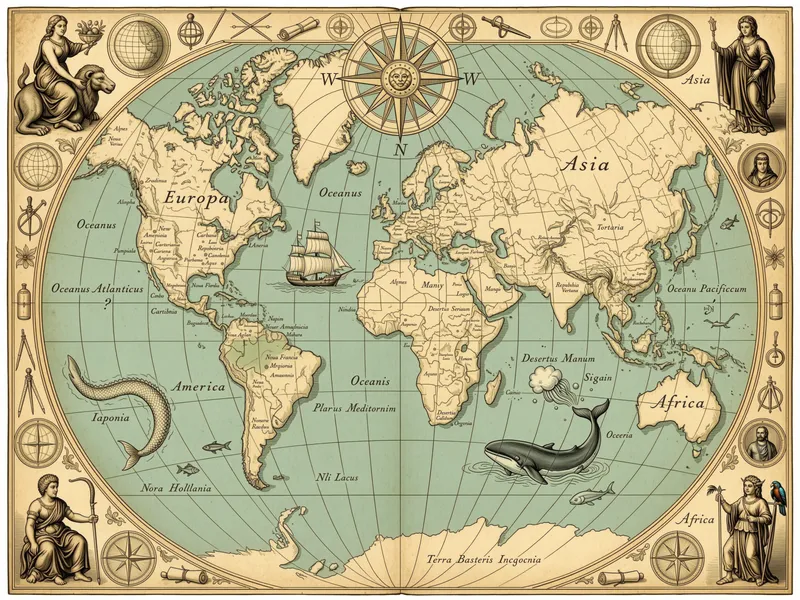
Orbis Terrarum presents a vintage 17th-century world map in the style of antique cartography, with finely engraved continents, an ornate compass rose, sailing galleons, sea creatures, celestial instruments, and Latin place names. This art print uses Enhanced Matte Paper (189 g/m²) for warm sepia parchment tones and subtle teal oceans, bringing historic character to a study, library, or thoughtful gift.
In a study, library, or quiet reading corner, this map suits the part of the day when the room settles into its own rhythm: a book open on the desk, a brass lamp casting a pool of amber light, and shelves of worn bindings rising behind it. Hang it above a writing table, beside a leather chair, or on the wall opposite a window where changing daylight can move across its fine lines. In morning light, the parchment-toned ground reads softly and the muted teal seas add a cool note; under evening light, the sepia surface sits comfortably with walnut, oak, brass, and dark green upholstery. It belongs among objects with a sense of use and curiosity—an atlas, a globe, a wooden ruler, or a small collection of framed botanical studies—rather than in a room that depends on bright, graphic colour.
The image follows the visual language of an engraved world map from the 17th century. Landmasses are drawn with delicate lines and crowded with Latin place names, giving the continents the look of a document intended for close study. Around them, the sea is more than open space: an ornate compass rose anchors the composition, sailing galleons travel across the water, and sea creatures appear in the waves. Celestial instruments and other navigational details fill the surrounding areas, linking the map to the practical and imaginative tools once used to understand the wider world. The balance of precise cartographic markings, decorative borders, and small maritime scenes rewards looking from a distance, while the names, ships, and symbols invite a closer view. Printed on enhanced matte paper, the artwork keeps a warm parchment character with subdued teal oceans, so it feels at home as both a decorative object and a piece to return to while reading or tracing routes with the eye.
For a traditional arrangement, place it in a dark walnut, medium oak, or black-stained wood frame with a narrow profile. A thin antique brass frame can draw out the warm tones without competing with the engraving; a simple black frame gives the map a cleaner edge in a modern study. Wall colours such as warm white, sand, mushroom, olive, slate blue, or charcoal provide a calm ground for the sepia and teal palette. Above a desk, leave enough surrounding space for the map’s lettering and small illustrations to remain legible. It can hang beside a tall bookcase, a framed star chart, or a pair of antique-style botanical prints. For a more collected gallery wall, combine it with smaller prints showing navigation instruments, coastal charts, ships, or architectural drawings, keeping the frames related in wood or metal. A leather desk mat, aged brass task lamp, and a few blue-spined books can repeat the print’s colours without making the room feel themed.
“An antique world map with mythical sea monsters invites slow looking, turning a wall into a window onto the age of exploration.”
- SubjectAntique world map with ornate cartouches and mythical sea monsters.
- Palette & lightAged parchment tones with soft sepia and faded ink on matte paper.
- CompositionDense central cartography framed by decorative borders and curious sea creatures.
- Where it fitsA study, library, or reading nook for history and travel lovers.
| Style | Vintage |
| Subject | 17th-century world map |
| Colors | sage, beige, tan |
| Orientation | Landscape |
| Suited to | reading nook, office |
| Material | Enhanced Matte Paper (189 g/m²) |
| Digital printing | |
| Care | Frame or mount out of direct sunlight; wipe gently with a dry, soft cloth. |
| Shipping | Made to order — ships in 2–5 business days |