Mushroom Specimen Plate Art Print, Victorian botanical decor, antique study wall art, gift for mushroom lovers
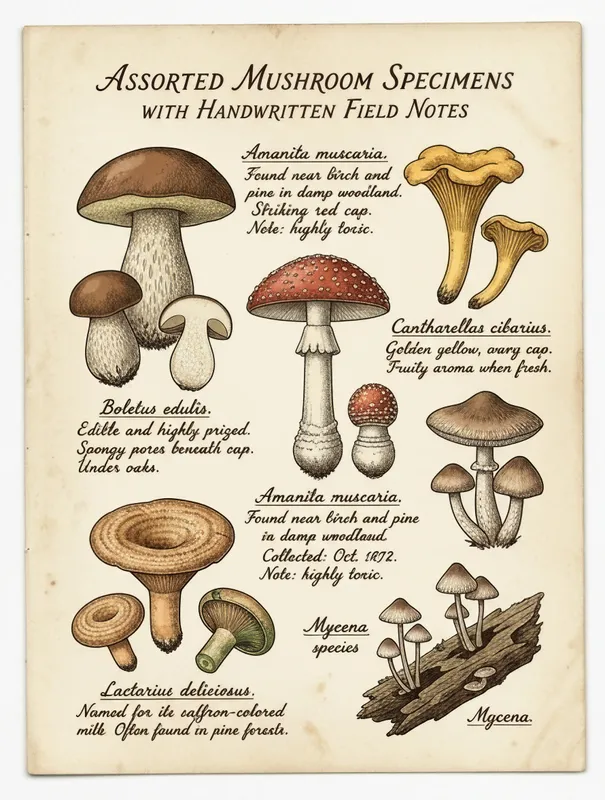
Assorted mushroom specimens are arranged like a Victorian naturalist’s plate, with fine ink linework, handwritten field notes, and labels in a sepia and deep green palette on aged cream paper. Printed on Enhanced Matte Paper (189 g/m²), this scholarly art print brings an antique curiosity-cabinet mood to a study, kitchen, or reading nook, and makes a thoughtful gift for mushroom lovers.
In a study with dark wood shelves, a writing desk, and the soft pool of a table lamp, this print settles naturally among books, glass jars, and small found objects. It suits the hour when daylight fades and the room turns amber: low light catches the cream ground while the inked forms remain clear against the deeper green details. Hang it above a desk, beside a reading chair, or on a narrow wall near a kitchen dresser where it can be viewed at close range. Around it, consider a stack of field guides, a brass magnifying glass, a ceramic vase, or a wooden box for the same collected, cabinet-of-curiosities feeling. Its scale and subject also make it easy to place in a guest room, home library, cottage kitchen, or reading nook without requiring a formal gallery wall.
The composition presents a group of mushroom specimens arranged across the page rather than as a single central still life. Each form is described with delicate ink contours: rounded caps, slender stems, layered undersides, and irregular edges that distinguish one specimen from another. Small handwritten observations sit between the illustrations, giving the sheet the character of a working naturalist’s record. Labels, ruled marks, and compact notes guide the eye from one mushroom to the next, while the open spaces keep the page from feeling crowded. The palette stays close to sepia, muted brown, deep forest green, and warm cream, with the restrained colour allowing the linework and lettering to do most of the visual work. The aged-looking ground suggests a page kept in an old portfolio or reference book, while the varied silhouettes bring rhythm across the rectangular composition. Seen from across the room, it reads as a botanical study; up close, the annotations and fine marks reward a slower look.
For a traditional setting, place it in a medium or dark walnut frame with a warm cream mount, then hang it beside botanical plates, bird studies, pressed-flower artwork, or an old map. A black frame gives the sepia and green palette a more graphic edge and works well against pale grey, putty, mushroom, or soft sage walls. On a deep green, ink blue, tobacco, or charcoal wall, use a light wood frame or a narrow brass-toned frame to separate the print from the background. In a kitchen, pair it with enamel signs, wooden utensils, terracotta pots, or a shelf of cookbooks; in a study, place it near a botanical chart, a cabinet of small drawers, or a vintage-style desk lamp. Keep neighbouring pieces quieter in colour so the handwritten notes remain legible, or build a varied specimen wall with different frame finishes and generous spacing. It also works alone above a small console, where its cream field can provide a visual pause between darker furniture and surrounding objects.
“Botanical specimen plates carry a quiet, scholarly weight that anchors a wall with vintage curiosity and natural-world reverence.”
- SubjectDetailed illustration of assorted fungi paired with handwritten botanical notes, evoking a naturalist's field study.
- Palette & lightSepia tones on matte paper lend warm, aged patina reminiscent of antique scientific journals.
- CompositionCentered specimen arrangement with marginalia creates a balanced, archival feel that reads from a distance.
- Where it fitsA study, reading nook, or gallery wall for naturalists, scholars, and quiet collectors of curiosities.
| Style | Botanical illustration |
| Subject | Assorted mushroom specimens |
| Colors | cream, beige, white |
| Orientation | Portrait |
| Suited to | reading nook, gallery wall |
| Material | Enhanced Matte Paper (189 g/m²) |
| Digital printing | |
| Care | Frame or mount out of direct sunlight; wipe gently with a dry, soft cloth. |
| Shipping | Made to order — ships in 2–5 business days |